
State of Fashion Technology Report 2022

State of Fashion Technology Report 2022


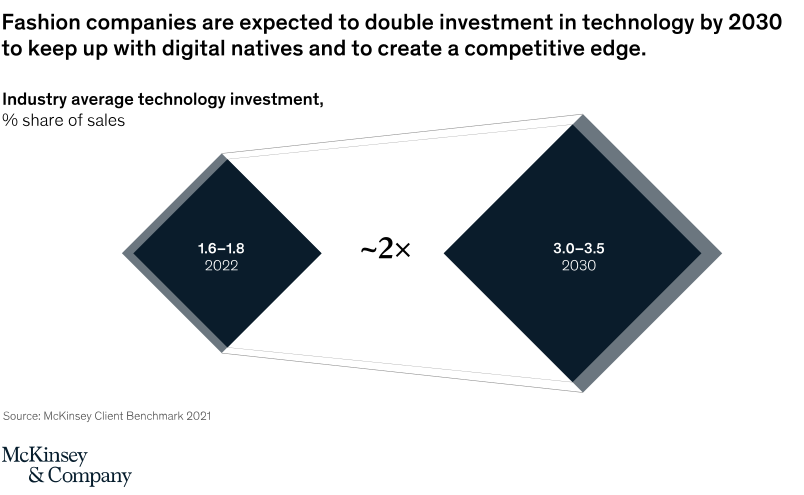
In 2021, fashion companies invested between 1.6 and 1.8 percent of their revenues in technology. By 2030, that figure is expected to rise to between 3.0 and 3.5 percent. Behind the predicted increase is a conviction among many that technology could create a competitive edge—in customer-facing activities, where companies have mostly focused to date, and, more increasingly, in operations. Technologies such as robotics, advanced analytics, and in-store applications may help streamline processes and support sustainability, as well as create an exceptional customer experience (exhibit).


Consumer digital engagement rose sharply during the COVID-19 pandemic, as a result of more hours spent online, new shopping habits, and rising interest in gaming and virtual worlds. In 2021, people spent on average just below four hours on their mobile phones, which includes about two and a half hours of scrolling though social media.


Of the fashion customers who made the move to online-shopping channels in 2021, 48 percent said the pandemic was the reason, 27 percent cited convenience, and 11 percent cited product availability and promotions.


The pandemic also boosted digital brand relationships, with 72 percent of customers reporting they interacted with brands online in 2021. In the year ahead, as restrictions ease in some geographic areas, digital interactions will likely stabilize at about 66 percent on average.


Fashion companies are expected to double investment in technology by 2030  to keep up with digital natives and to create a competitive edge.


We strive to provide individuals with disabilities equal access to our website. If you would like information about this content we will be happy to work with you. Please email us at: [email protected]


Looking ahead, the impact of technology on people’s lives may accelerate. By 2024, AI-generated speech could power more than half of human interactions with computers, McKinsey analysis shows. Soon after, more than 75 percent of enterprise-generated data could be processed by cloud or edge computing.


This offers a more flexible, scaleable foundation on which brands can potentially build their tech offerings. By 2030, more than 80 percent of the global population is expected to have access to 5G networks,


enabling, among other things, faster connectivity and data transfer across Internet of Things devices.

The operational potential of technology is becoming ever more apparent. McKinsey analysis shows that fashion companies that now embed AI into their businesses models could see a 118 percent cumulative increase in cash flow by 2030. Conversely, those that are slower to invest in digital technology will lag behind—and could see a 23 percent relative decline. Over the next three years, potential key areas in which fashion executives could make digital investments are personalization, store technologies, and end-to-end value chain management—areas in which digital can make a real difference to performance.

Fashion’s five key technology themes

As fashion industry

Read More

How Rising Technology Is Breaking Arms Control

How Rising Technology Is Breaking Arms Control

Editor’s Take note: New technologies are emerging at a dizzying rate, and arms regulate agreements can’t appear to hold up. My Brookings colleague Amy Nelson examines how the increased velocity of technological improve is making holes in current arms command agreements and how policymakers could greater react as the velocity of improve proceeds to expand.

Daniel Byman

***

Until eventually not long ago, arms control—the system of agreements, businesses and processes to regulate specific kinds of weapons—has proved an powerful tool for threats from common and nuclear systems. Right now, on the other hand, arms control is suffering from a spate of big violations, suspensions and withdrawals.

But it is not only condition habits that is undermining arms handle. The regimes are getting disrupted by the speedy pace of technological alter in three essential approaches. Initial, industrially innovative nations (and aspiring kinds) are accelerating the level of growth for improvements. New technologies are emerging way too rapidly for functioning group members—typically a blend of technologists and diplomats—to continue to keep handle lists latest with rising threats. Second, the systems underlying present weapons, platforms and systems—from the schematics for how they are built to the program that can make them run—are staying digitized, and newer systems are emerging in digital formats that circumvent existing regulation. Third, the combination of accelerated innovation and digitization is contributing to the digital diffusion of systems that augment the risk of proliferation and empower states to preserve latent military services abilities.

Present arms management regimes are failing to adapt to these technological shifts. If arms management, currently embattled by compliance violations and withdrawals, is to fulfill the minute, states have to have to muster the political will to handle its worries and shore up the current nonproliferation architecture from the base up.


The Atrophying of Modern Arms Regulate


Arms control programs have emerged above time as states have collectively constructed out regulatory regimes and modernized their lists of controlled technologies. The nuclear nonproliferation technique has been a successful merchandise of this process. Nuclear arms handle commenced with the 1968 Treaty on the Non-Proliferation of Nuclear Weapons (NPT), a multilateral treaty that works to management the unfold of nuclear weapons and weapons technological innovation, advertise the tranquil use of nuclear electrical power through global cooperation, and advance the goal of nuclear disarmament. Following the NPT’s entry into power, numerous nations with nuclear engineering founded the Zangger Committee to improve on existing nuclear nonproliferation treatments and methods and satisfy the NPT’s Article III.2 necessity for member states to undertake export controls over materials and equipment that could be applied to develop distinctive fissionable material—that is, the supply content for a nuclear bomb. The purpose was to offer greatest procedures for export controls developed to hold nuclear precursor things and supplies out of the palms of probably nefarious actors. After India performed its first nuclear exam in 1974, the Nuclear Suppliers Group (NSG) was established by nuclear supplier nations around the world to stop the export of twin-use technologies—technologies

Read More

Musk’s Twitter Ambitions to Collide With Europe’s Tech Regulations | Technological know-how Information

Musk’s Twitter Ambitions to Collide With Europe’s Tech Regulations | Technological know-how Information

By KELVIN CHAN, AP Organization Writer

LONDON (AP) — Elon Musk’s Twitter acquisition and his programs for a extra palms-off technique to moderating information could clash with formidable new legal guidelines in Europe intended to guard users from disinformation, detest speech and other harmful materials.

Musk, who describes himself as a “free speech absolutist,” pledged to obtain Twitter for $44 billion this week, with European Union officers and digital campaigners brief to say that any aim on no cost speech to the detriment of online protection would not fly soon after the 27-nation bloc solidified its position as a international leader in the effort to rein in the electricity of tech giants.

“If his approach will be ‘just end moderating it,’ he will probably obtain himself in a lot of lawful difficulty in the EU,” said Jan Penfrat, senior policy adviser at electronic rights group EDRi.

Musk will before long be confronted with Europe’s Digital Companies Act, which will require large tech businesses like Twitter, Google and Facebook mum or dad Meta to law enforcement their platforms extra strictly or deal with billions in fines.

Political Cartoons on Planet Leaders

Political Cartoons

Officers agreed just days ago on the landmark legislation, anticipated to consider impact by 2024. It’s unclear how shortly it could spark a related crackdown in other places, with U.S. lawmakers divided on attempts to address level of competition, on line privacy, disinformation and much more.

That implies the job of reining in a Musk-led Twitter could fall to Europe — some thing officials signaled they are completely ready for.

“Be it vehicles or social media, any corporation running in Europe demands to comply with our guidelines — no matter of their shareholding,” Thierry Breton, the EU’s interior industry commissioner, tweeted Tuesday. “Mr Musk knows this well. He is acquainted with European procedures on automotive, and will promptly adapt to the Electronic Expert services Act.”

Musk’s programs for Twitter haven’t been fleshed out outside of a number of tips for new attributes, opening its algorithm to community inspection and defeating “bots” posing as authentic consumers.

France’s electronic minister, Cedric O, said Musk has “interesting things” that he needs to drive for Twitter, “but let’s remember that #DigitalServicesAct — and hence the obligation to struggle misinformation, on the internet detest, and so on. — will implement irrespective of the ideology of its proprietor.”

EU Inexperienced Bash lawmaker Alexandra Geese, who was associated in negotiating the legislation, reported, “Elon Musk’s idea of free of charge speech with out material moderation would exclude large parts of the population from general public discourse,” this sort of as gals and folks of color.

Twitter declined to remark. Musk tweeted that “the serious antibody reaction from those people who concern free of charge speech claims it all.” He additional that by cost-free speech, he implies “that which matches the law” and that he’s against censorship likely “far over and above the legislation.”

The United Kingdom also has an online protection legislation in the performs

Read More

Technologies system Higg raises $50M Sequence B to speed up offer chain sustainability

Technologies system Higg raises M Sequence B to speed up offer chain sustainability

SAN FRANCISCO, April 27, 2022 /PRNewswire/ — Higg, the sustainability insights platform for the buyer products field, now announced its $50M Series B funding spherical. The funding is co-led by technological innovation development trader Silversmith Funds Companions and Tom Steyer and Katie Hall’s Provoke Weather Alternatives, alongside with participation by Series A partners Titan Grove and Buckhill Money. With close to 50,000 manufacturer and company buyers in 100+ nations around the world, Higg enables continual improvement of offer chain sustainability—across not only carbon but water, vitality, and labor impacts as properly. This funding will accelerate Higg’s shipping and delivery of revolutionary engineering options and its rapid expansion into new buyer products categories these as outside, automotive, toys, and residence products.

Higg is the sustainability insights platform for consumer goods businesses – delivering software and services for measuring, managing, and sharing supply chain performance data. 

From materials to products, from facilities to stores, from emissions to working conditions, Higg unlocks a complete view of a business’s social and environmental impact. 

Built on the leading framework for sustainability measurement, Higg is trusted by global brands, retailers, and manufacturers to provide the single source of ESG intelligence they need to accelerate business and industry transformation.

Launched in 2019 as a public-benefit corporation, Higg is the exclusive licensee of the Higg Index, the industry-leading value chain measurement methodology developed by the Sustainable Apparel Coalition. www.higg.com (PRNewsfoto/Higg)

Higg is the sustainability insights platform for client products corporations – providing application and solutions for measuring, taking care of, and sharing source chain effectiveness information. From materials to products, from facilities to shops, from emissions to operating disorders, Higg unlocks a total see of a business’s social and environmental effects. Built on the primary framework for sustainability measurement, Higg is trustworthy by world wide makes, merchants, and suppliers to give the solitary supply of ESG intelligence they need to speed up enterprise and market transformation. Released in 2019 as a general public-benefit company, Higg is the exclusive licensee of the Higg Index, the field-leading value chain measurement methodology produced by the Sustainable Apparel Coalition. www.higg.com (PRNewsfoto/Higg)

Higg’s Sequence B comes as businesses facial area expanding anticipations for ESG (environmental, social, and governance) accountability and disclosure. Rules are now getting produced in the EU and US for source chain owing diligence, in addition to the latest guidelines for solution labeling and sustainability statements. Consumers are also trying to find better product-stage transparency about the goods they invest in.

“In this new era of expectations, extra firms will be required to have credible impression info about their provide chains. “The real truth is that measuring owned operations is simple,” claimed Higg CEO, Jason Kibbey. “For customer products firms, the problem is obtaining exact info on the non-owned factories that make the goods—and on the supplies and products and solutions them selves.”

“That’s why we’re thrilled to have Silversmith and Galvanize supporting us,” Kibbey ongoing. “Silversmith brings practical experience in SaaS innovation which is desired to scale our engineering and Tom Steyer’s effort at Galvanize is the ideal enhance offered their emphasis in local climate answers. We are energized to faucet into their know-how so that Higg results in being a essential resource for ESG information by the price chain and across sectors.”

Trustworthy by big models as perfectly as tens of hundreds of brands across the earth, details on the Higg system is employed to style extra sustainable merchandise, to expand employee very well-remaining, and to discover suppliers with diminished effect throughout emissions, h2o, chemical compounds, and squander. When a lot of sustainability options provide higher-level estimates of a business’ impact, Higg delivers

Read More

There should be far more evidence of alien technological innovation than alien biology across the Milky Way

There should be far more evidence of alien technological innovation than alien biology across the Milky Way
There should be more evidence of alien technology than alien biology across the Milky Way
Artist’s notion of a Dyson sphere. Credit rating: SentientDevelopments.com

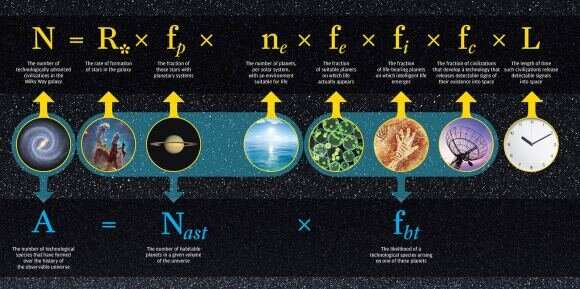
The Drake equation is a single of the most popular equations in astronomy. It has been endlessly debated due to the fact it was 1st posited in 1961 by Frank Drake, but so considerably has served as an powerful baseline for discussion about how significantly everyday living may well be distribute throughout the galaxy. However, all equations can be improved, and a staff of astrobiologists and astronomers believe they have discovered a way to make improvements to this a person.

The equation itself was centered all-around the research for radio alerts. On the other hand, its formulation would suggest that it is additional very likely to see what are now generally termed “biosignatures” alternatively than technological kinds. For case in point, astronomers could obtain methane in a planet’s environment, which is a obvious indicator of lifetime, even if that world hasn’t designed any sophisticated intelligence nonetheless.

That look for for biosignatures was not attainable when Drake at first wrote the equation—but it is now. As such, it may well be time to modify some of the things in the first equation to reflect scientists’ new research abilities far better. A person way to do that is to break up the equation into two independent types, reflecting the lookup for biosignatures and technosignatures respectively.

Biosignatures, captured in the new framework by the term N(bio), would probable build much extra typically than technosignatures, captured in the new framework as N(tech). Logically that would end result from the reality that the range of planets that go on to develop a technologically state-of-the-art civilization is substantially significantly less than the overall selection of planets that form everyday living in the to start with spot. Following all, it took Earth all around 4 billion several years immediately after its first spark of everyday living to acquire an clever civilization.

There should be more evidence of alien technology than alien biology across the Milky Way
Graphical depiction of a modified Drake equation, and every of its constituent factors. Credit score: College of Rochester

But that will not account for a essential characteristic of technology—while it could have to originate from a earth with a biosphere, it certainly will not have to continue to be there. This noticeably impacts yet another issue in the Drake equation—L or the length of time that a sign is detectable. Dr. Jason Wright of Penn State University, the very first author of the new paper revealed in The Astrophysical Journal Letters, and his co-authors position out that four things point to technologies being probably extended-lived than biology.

Initial, as would be apparent to anyone who is a admirer of science fiction, engineering can lengthy outlive the biology that designed it. In fact, in some scenarios, the technology by itself can demolish the biosphere that established it. But it would nonetheless be detectable, even at a length, long soon after the lifeforms that had established it had died off. And it could do so on the get of hundreds of thousands or even billions of several years,

Read More

U.S.-China Technological “Decoupling”: A Strategy and Policy Framework

U.S.-China Technological “Decoupling”: A Strategy and Policy Framework

Table of Contents

Foreword

Technology is the engine that powers superpowers. As the chair of the National Security Commission on Artificial Intelligence (NSCAI), I led the effort that ultimately delivered a harsh message to the U.S. Congress and to the administration: America is not prepared to defend or compete in the AI era. The fact is that America has been technologically dominant for so long that some U.S. leaders came to take it for granted. They were wrong. A second technological superpower, China, has emerged. It happened with such astonishing speed that we’re all still straining to understand the implications.

Washington has awakened to find the United States deeply technologically enmeshed with its chief long-term rival. America built those technology ties over many years and for lots of good reasons. China’s tech sector continues to benefit American businesses, universities, and citizens in myriad ways—providing critical skilled labor and revenue to sustain U.S. R&D, for example. But that same Chinese tech sector also powers Beijing’s military build-up, unfair trade practices, and repressive social control.

What should we do about this? In Washington, many people I talk to give a similar answer. They say that some degree of technological separation from China is necessary, but we shouldn’t go so far as to harm U.S. interests in the process. That’s exactly right, of course, but it’s also pretty vague. How partial should this partial separation be—would 15 percent of U.S.-China technological ties be severed, or 85 percent? Which technologies would fall on either side of the cut line? And what, really, is the strategy for America’s long-term technology relationship with China? The further I probe, the less clarity and consensus I find.

In fairness, these are serious dilemmas. They’re also unfamiliar. “Decoupling” entered the Washington lexicon just a few years ago, and it represents a dramatic break from earlier assumptions. In 2018, for example, I remarked that the global internet would probably bifurcate into a Chinese-led internet and a U.S.-led internet. Back then, this idea was still novel enough that the comment made headlines around the world. Now, the prediction has already come halfway true. Meanwhile, policymakers—who usually aren’t technologists—have scrambled to educate themselves about the intricate global supply chains that still link the United States, China, and many other countries.

In 2019, I was appointed to be the chair of the NSCAI, a congressionally mandated bipartisan commission that was charged with “consider[ing] the methods and means necessary to advance the development of artificial intelligence, machine learning, and associated technologies to comprehensively address the national security and defense needs of the United States.”1 I worked with leaders in industry, academia, and government to formulate recommendations that would be adopted by Congress, the administration, and departments and agencies.

We were successful, but this effort did not go far enough. That is why I continue to advocate for major legislation (such as the United States Innovation and Competition Act and the America COMPETES Act), to develop the next phase of implementable policy options (through

Read More