4 USB-C hubs to expand your computer ports | Technology

4 USB-C hubs to expand your computer ports | Technology

Users of the new Apple MacBook laptops with limited USB-C ports know how important port hubs are to increase the capacity of connections. They can include Ethernet ports, memory card readers, USB-A ports for accessories and more USB-C ports for power delivery.

The latest round of hubs from electronics company Satechi includes the USB-C Pro Hub Mini — something perfect for everyday users at home, in offices or when traveling.


PLG-GADGETS-1-MCT

Satechi Pro Hub Mini adapter

$70, available at satechi.net and Amazon


The Pro Hub Mini ($70, satechi.net) is built as an extension of a MacBook’s built-in USB-C ports, connecting to the laptop via two USB-C dongles and a 3.5mm audio jack. It gives users a secure connection without the need for drivers or installation software. The device can be easily removed if needed.

Six ports adorn the Pro Hub Mini: a pair of USB-C ports (one with power delivery) and a 3.5mm audio port to compensate for what it takes up with its mounting connection, two USB-A ports and a Gigabit Ethernet port. (Note: Some newer MacBooks have a 3.5mm audio port on the opposite side of the computer’s USB-C ports. The Pro Hub Mini’s 3.5mm jack can be folded into the device if no audio port is available for connection.)

People are also reading…

According to Satechi, one of the Pro Hub Mini’s USB-C ports supports up to 6K 60Hz display output and up to 40 Gbps of data transfer. The other USB-C data port and USB-A ports supports up to 5 Gbps. When using the USB-C Pro Hub Mini as power delivery, it provides 96W of charging power, so check the requirements of your computer.

The device measures 3.97-by-1.5-by-0.47 inches and is available in Apple-matching colors of silver or space gray.

Desktop ports


PLG-GADGETS-2-MCT

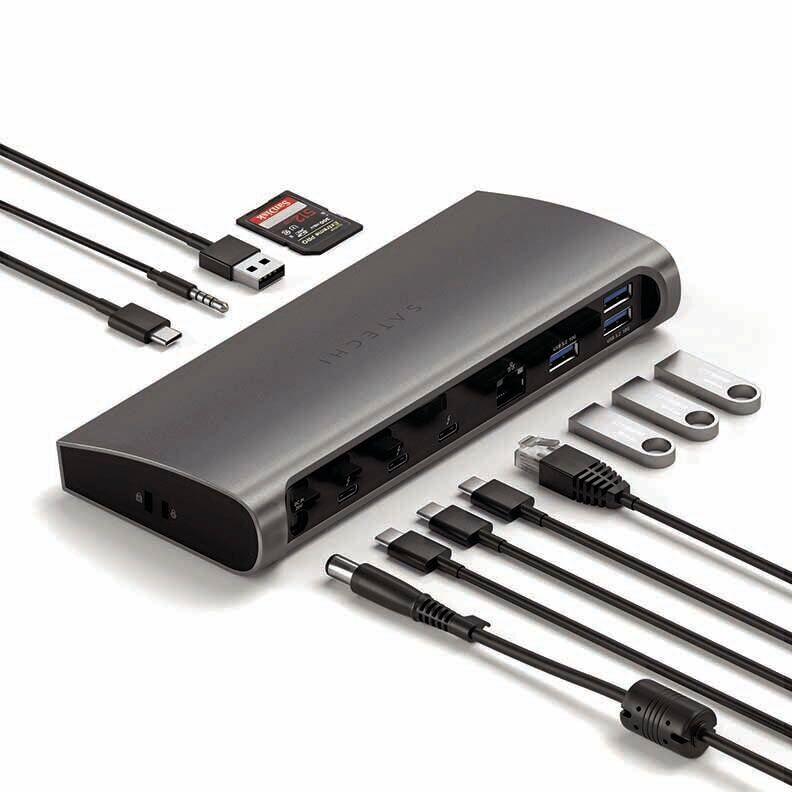
Thunderbolt 4 Dock is built with 11 ports on the dock with a single computer USB-C connection (cable included). (Satechi/TNS)


MacBook Pro M1 Max users with Thunderbolt 4 will flourish with Satechi’s matching expansion dock. It hooks up to the computer via a single USB-C connection (cable included) and features 11 ports:

Four Thunderbolt 4 ports (capable of up to 40 Gbps data transfer, with one channeling 96W of power delivery)

  • Four USB-A ports
  • 3.5mm audio jack port
  • Ethernet port
  • UHS-II card reader

Additionally, an AC adapter is included to give the Thunderbolt 4 adapter dock an external power boost to run any high-powered peripherals.

USB-C Multimedia M1 adapter


PLG-GADGETS-3-MCT

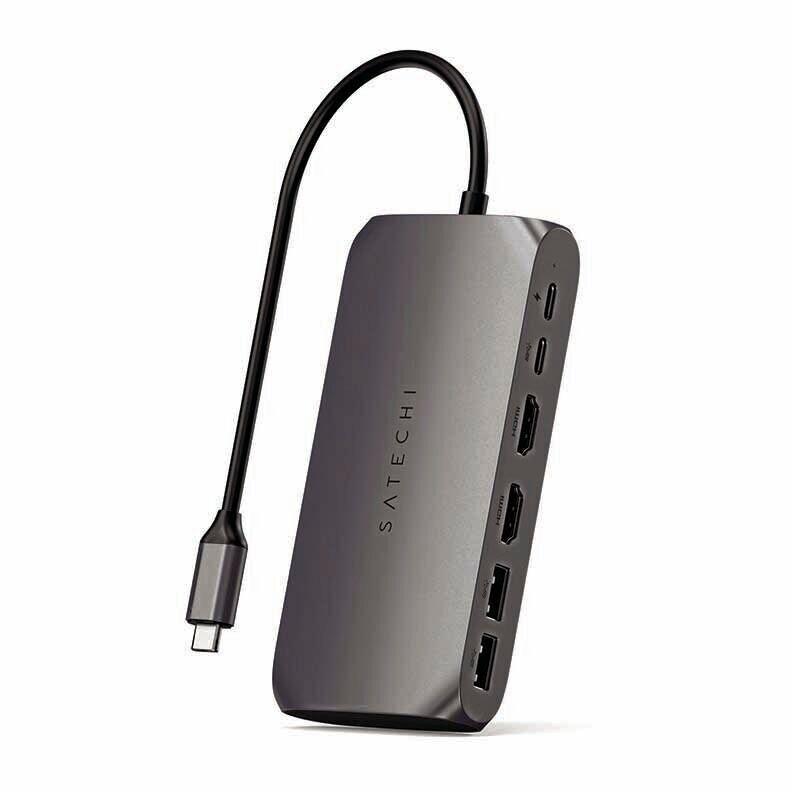
Satechi USB-C Multimedia M1 adapter has six ports, including dual USB-C, dual HDMI 4K HDMI ports (60Hz/30Hz), and two USB-A 3.0 data ports. (Satechi/TNS)


Six ports are in the Satechi USB-C Multimedia M1 adapter, including dual USB-C, dual HDMI 4K HDMI ports (60Hz on one, 30Hz on the other) and two USB-A 3.0 data ports. One USB-C supports charging up to 85W, and the other data port is rated up to 5 Gbps. The adapter connects to a computer’s USB-C port through its built-in cable.

USB-C Multiport MX adapter

Satechi’s USB-C Multiport MX

Read More

Innovative new magnificence technology “Cellester” can make V formed experience and beautiful bust attainable. The secret to wanting younger eternally exposed.

Innovative new magnificence technology “Cellester” can make V formed experience and beautiful bust attainable. The secret to wanting younger eternally exposed.

HONG KONG, March 12, 2022 /PRNewswire/ — New splendor technological innovation Cellester has not too long ago introduced, building more youthful looking face and much more lovely bust curves accessible to buyers in Asia. Cellester technological innovation helps to awaken collagen production, rejuvenate the experience and body. Great V shaped experience and eye-catching overall body curves can now be received by means of specific and scientific methods.

Cellester - Japanese style face and body beautifying program (PRNewsfoto/Cellester)

Cellester – Japanese design and style experience and human body beautifying application (PRNewsfoto/Cellester)

Cellester can aid to restore skin elasticity, making it young and supple. The secret to keeping younger for good is now unveiled.

Unlocking the Japanese top secret to being youthful: Reversing glycation

Impressed by Japanese natural beauty spas, Cellester LEGEND utilizes precise thermal and photodynamic power to reverse the damaging consequences of glycation, which is one particular of the big results in of saggy and inflamed pores and skin. Cellester electric power can aid to apply regenerative thermal power to the dermis layer, with its impact far surpasses that of common topical skincare serums. Cellester engineering can also support to aid elastins and collagen output.

Excessive sugar in diet will blend with protein tissues, resulting in a by-product referred to as AGEs, Superior Glycation Close Items. This damaging substance have a detrimental oxidation results on the pores and skin, resulting in collagen loss and getting older. Even with invasive beauty surgical procedures, it is not achievable to entirely rectify the collagen decline from a fundamental standpoint. Injections and fillers, even though handy, are only short-term measures with transient outcomes.

Experiments executed by universities and academia in Tokyo Japan, had revealed that AGEs are not only dangerous to physical appearance, but also may perhaps have destructive results on cognitive abilities.

Higher-end Japanese beauty spas use particular beauty gear to assist the generation of collagen and fibroblasts. This aids to reverse the skin complications induced by glycation.

Cellester LEGEND with its specifically made handpieces, such as multi-polar radio frequency, thermal heatwaves and also cryo strength, helps to restore a completely contoured, youthful wanting V formed confront.

Cellester equipments employ also ultrasonic energy and clever GPS devices to proper getting old at the SMAS degree, less unpleasant than classic HIFU therapies and its beautifying consequences are equivalent to regular deal with lift surgical procedures.

A additional generous bust shape

Also readily available is Cellester Bust product, a specifically cream formulated in Japan that has a profound bust firming consequences with an remarkable security report. The product takes advantage of a special formulation of EGFs, Soy Isoflavones, pomegranate fruit extracts and hexapeptide. It passed the most arduous toxicology exams at Japanese labs and has shown to support bust body fat absorption, building a more generous bust condition. The cream can be employed independently or with the Cellester devices.

In comparison to common breast enhancement surgical procedures, non invasive actions and regular bust care massages are considerably much more normal in effects and visual appeal, and a ton

Read More

Can a new 3M technology help climate-proof our buildings?

Can a new 3M technology help climate-proof our buildings?

As solar panels devoured the winter sun from the roof of North Market on a recent morning, a new set of nearby panels was sending energy right back to the sky.

Equipped with a 3M-manufactured film that reduces temperatures without electricity, these reflective panels can dramatically improve the efficiency of energy-intensive refrigeration systems.

For the North Minneapolis grocery store — the first in Minnesota with a SkyCool Systems installation — that means money saved. For a warming planet, that means greenhouse gas emissions reduced while cooling needs climb.

The world now faces “unavoidable multiple climate hazards” in the coming decades, according to the most recent U.N. climate report. Adapting to a changed climate in which air conditioning will play a bigger role has become more important as efforts to mitigate global warming have fallen short.

SkyCool and 3M are working together to sell the cooling panel systems to grocery stores and other users who consume a great deal of electricity keeping things cold — though the concept could spread to other energy-saving uses.

“Grocery stores run on thin margins — anything over 10% in energy savings is going to be very meaningful,” said 3M business developer Billie Pritzker. The panels can provide savings of 15% to 20%, she said.

Air conditioning and refrigeration consume a quarter of the world’s electricity and contribute 7% of global greenhouse gas emissions. SkyCool says its panels can save twice as much energy as similar-sized solar panels can produce.

Chief Executive Eli Goldstein knows the assertion raises some eyebrows.

“There’s always skepticism around new technologies,” said Goldstein, whose company is based in Silicon Valley. “This is a technology that can directly cool the environment. It’s a very clear cost-benefit.”

A few big-box retailers are trying out the panels as a way to meet ambitious carbon reduction goals. 3M is installing the technology on one of its plants in California. A data center is also piloting the cooling panels.

“There’s a lot we can do just by having these very reflective surfaces on rooftops,” Goldstein said. “Now how do you integrate it into a product, and who do you sell it to?”

How the technology works

3M’s high-tech piece of what feels like plastic — really hundreds of nano-layers of precise thickness that work together to reflect solar energy — is borrowed from the natural world.

“That same structure is in the wings of butterflies and fish scales,” 3M scientist Tim Hebrink said.

The type of film used to reflect sunlight and radiate heat back into the atmosphere relies on “passive radiative cooling,” another natural phenomenon seen when frost appears on windows even when air temperatures remain above freezing.

“The two key properties are solar reflectivity and thermal emissivity,” Hebrink said. “That’s what gives us the ability to radiate heat to the sky.”

SkyCool arrays work by cooling a fluid that moves below the panels and is pumped through refrigeration systems. The cooling helps reduce the run time of motors in the refrigeration system to reduce

Read More

RootsTech 2022: New family history technology, keynote messages

RootsTech 2022: New family history technology, keynote messages

RootsTech 2022 picked up right where it left off last year — by reaching more than 1 million participants in over 225 countries and territories in its first day.

Many more are expected to participate in the free online family history conference before it ends on March 5, according to a FamilySearch news release.

Participants who log in to RootsTech.org can choose from more than 1,500 learning sessions on 185 topics in over 30 languages, as well as can create custom playlists of sessions they would like to watch now or later on demand during the year. DNA, family history research, technology, travel and storytelling are among the popular topics.

The conference has featured messages from a diverse lineup of keynote speakers.

The large gathering also provides a prime opportunity for organizations such as FamilySearch, MyHeritage and other major sponsors to introduce new technology, updated tools and innovations.

Here is a quick look at some of the new technology and thoughts on connection from featured keynote speakers.

What is ‘Get Involved’?

FamilySearch has developed a new volunteer online experience called “Get Involved” that uses handwriting recognition technology. The new tool was released at RootsTech.

FamilySearch has developed a new volunteer online experience called “Get Involved” that uses handwriting recognition technology.

FamilySearch has developed a new volunteer online experience called “Get Involved” that uses handwriting recognition technology.

Here’s how it works:

  • A user pulls out his or her phone and clicks on the “Get Involved” app.
  • The user selects a country where his or her ancestors are from.
  • A record appears with a highlighted name. The user is provided with options to confirm the name, edit it or click “Unsure.” The name appears correct and the user confirms it. 
  • The app guides the user through a batch of names on records. The names confirmed are saved on FamilySearch for use in building a family tree
  • The task takes less than two minutes to complete.

In 2021, FamilySearch completed the microfilm digitization initiative, a new database with names and information for billions. FamilySearch hopes volunteers will use “Get Involved” to help digitize those records to help people find and connect with their ancestors.

The first projects available in English will be refining United States Wills and Deeds collections from almost all 50 states. The 1950 U.S. Census will be released in April. Additional projects in Italian, Portuguese and other Latin American countries are also in the works.

Learn more at FamilySearch.org/GetInvolved.

MyHeritage releases ‘LiveStory’

Last year, MyHeritage launched “Deep Nostalgia,” technology that brought still pictures to life with AI animation. It quickly became a global sensation. Many had fun using the technology to give movement to historic images of famous people.

This year MyHeritage released a new photo feature called “LiveStory.” LiveStory creates an animated video narrative of an ancestor as if they were telling their personal story.

“This incredible feature gives voice to your family stories and enables you to connect your ancestors in a remarkable new way,” said Maya Lerner, vice president of product at

Read More

Genoa combines technology with play to educate personal computer science

Genoa combines technology with play to educate personal computer science

Genoa at this time has a substitute technologies levy on the May well ballot.

GENOA, Ohio — How do instructors hold kids engaged in large strategy lessons, like computer coding?

A single local instructor has figured out a way to blend pc science with bodily activity.

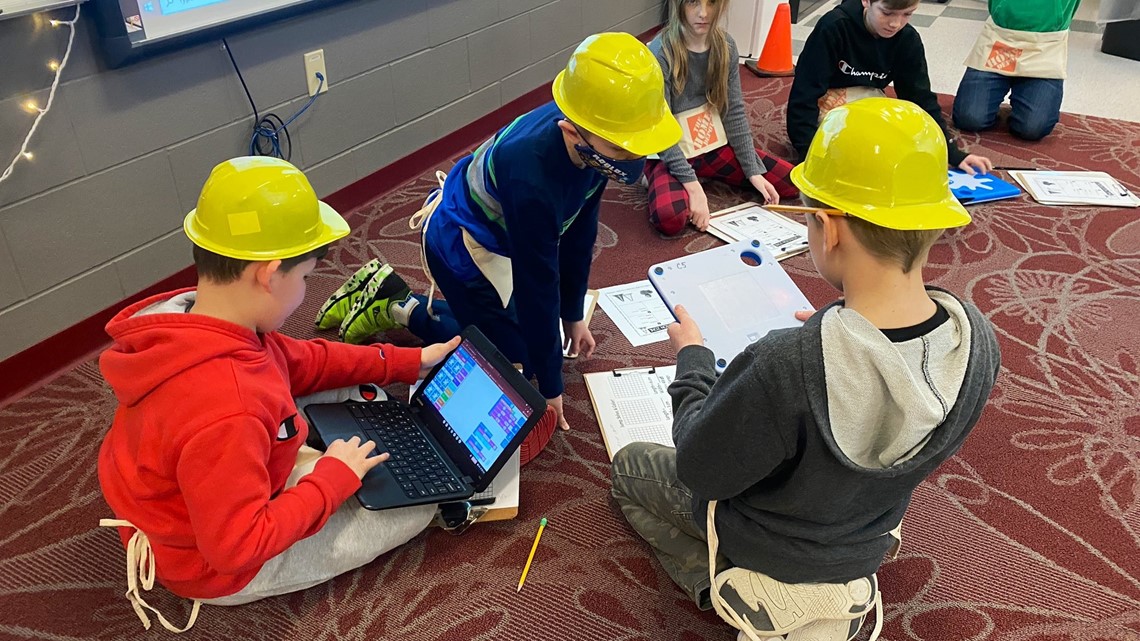
There is a construction zone within of this 3rd-quality classroom at Genoa Elementary.

With hardhats all set, these college students are working with math, geometry, and a little bit of actual physical exercise to solve their assigned challenges.

These activities are operate by Genoa area community university‘s technological know-how integration expert Christine Danhoff, who is making use of these Unruly Splats and programmable robots to introduce these college students to coding.

“Personal computer science is something so critical in our planet nowadays. And they are using anything as an alternative of just trying to keep coding out on its personal, accomplishing it inside of math and so several other subjects,” Danhoff mentioned.

These activities seem more like enjoy than studying, but these workout routines aid pupils use what they have figured out in the classroom in a various way.

“The quicker we expose our students to that know-how, I consider the greater off they’re heading to be for the upcoming,” stated Serena Parlette, Genoa Elementary third-quality instructor.

And even even though they are continue to finding out in their classroom, these learners claimed they often look ahead to a take a look at from Mrs. Danhoff.

“I was rather fired up since math is like my favorite subject matter” 3rd-grader Sage Ruiz stated.

“I used to like math really a lot, and it really is really entertaining. So, now it is just produced it even funner,”  student Jonah Danhoff stated.

Mrs. Danhoff’s work isn’t just with the elementary pupils at Genoa. She has classes and routines to implement and increase on laptop or computer science classes all the way by means of the superior college degree.

“Which is likely to proceed all the way by means of their Middle Faculty and Large University career, and maybe they choose a career that has something to do with that far too,” Danhoff stated.

She reported that these fingers-on STEAM lessons are accessible to Genoa students immediately due to the fact of the college district’s technologies levy, which is up for a alternative vote this May well. Voters will come to a decision the fate of a 5-calendar year, .5-mill substitution levy.

“It would be magnificent for us to proceed the use of what we have below in the district. And which is part of what that levy is, is to be equipped to go on to allow for the learners to have these applications and sources to be ready to use in the classroom,” Danhoff explained.

Read More

EVP and GM of Intel’s Technology Development

EVP and GM of Intel’s Technology Development

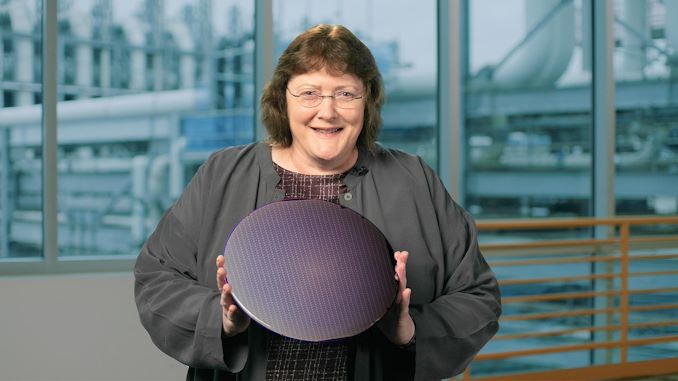
It’s somewhat of an understatement to say that Intel’s future roadmap on its process node development is one of the most aggressive in the history of semiconductor design. The company is promising to pump out process nodes quicker than we’ve ever seen, despite having gone through a recent development struggle. Even with CEO Pat Gelsinger promising more than ever before, it’s up to Intel’s Technology Development (TD) team to pick up the ball and run with it in innovative ways to make that happen. In charge of it all is Dr. Ann Kelleher, EVP and GM of Intel’s Technology Development, and on the back of some strong announcements last year we reached out for the chance to interview her regarding Intel’s strategy.

Dr. Kelleher is a long-time Intel employee, going back 26 years and starting in Intel Ireland. Starting with semiconductor research, Dr. Kelleher took roles in manufacturing, rising through the ranks to Fab Manager and then being in charge of all of Intel’s manufacturing facilities. The pivot to Technology Development, as we’ll see in the questions below, is a complementary move that brings together both the experience of development and manufacturing. What I loved about speaking to Ann is the element of quiet but striking determinism in the way she spoke – for as much as the CEO is shouting from the rooftops about Intel’s ability to execute, a few minutes with Ann showcases just how focused the people who have to do the research and development really are and how important it is to them on a personal level. 


Dr. Ann Kelleher

Intel


Dr. Ian Cutress

AnandTech

This interview took place before Intel’s Investor Meeting.


Ian Cutress: Going through your history, you joined Intel in early 1996, making you a 26-year veteran of the company – an Intel ‘lifer’! In working up from Process Engineer, to now GM of Technology Development, what exactly has been your journey through Intel?

Ann Kelleher: Well, I started back in 1996 – maybe I even started a little bit before 1996. When I was in college, I did a Master’s and a PhD – I did it in a research centre in Ireland, which was called the National Microelectronics Research Centre, which was in Cork. Then when I finished there, I went to imec in Belgium and I did a postdoc, and then I returned to Ireland. Then I was leading a small research group, in the same research institute as my PhD, but Intel Ireland was starting up a factory at the time. It was a new factory that became Fab 14. They were hiring for Fab 14, and at the time they basically asked me to come and talk to them, they asked me to come and interview, and I did.

I got the job. At the time, I thought I would come for a year. A lot of my job prior to joining Intel was basically writing project

Read More