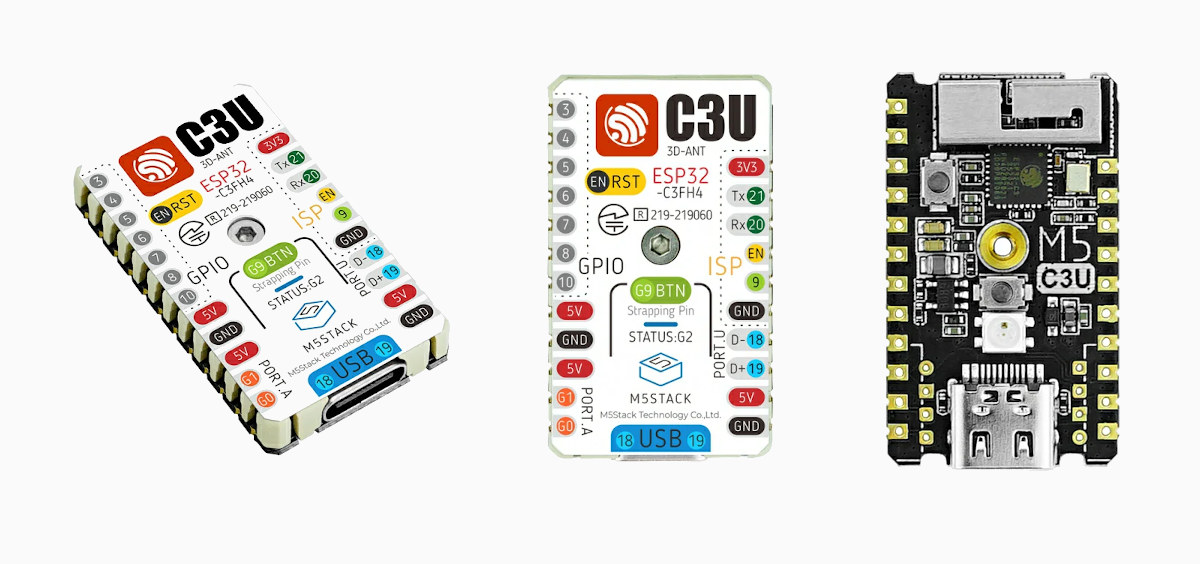
M5Stamp C3U IoT module relies on ESP32-C3’s own USB interface for firmware programming

M5Stamp C3U IoT module relies on ESP32-C3’s own USB interface for firmware programming

M5Stamp C3U is an update of the M5Stamp C3 RISC-V IoT module with heat-resistant cover, support for WiFi 4 and Bluetooth 5.0, that does without CH9102 USB to TTL chip, relying instead on the internal USB interface of ESP32-C3 processor to handle serial programming of the firmware, and gaining on extra GPIO pin in the process.

While several ESP32 processors come with a built-in USB interface, many boards still use an external USB to TTL chip such as CH340 or CP2102 to handle the serial interface used for debugging and flashing the firmware likely because of limitations when using ESP32-C3’s USB serial/JTAG controller console, but M5Stack probably considered those to be workable, and the small cost-saving beneficial.

M5Stamp C3U

M5Stamp C3U specifications:

  • WiSoC – ESP32-C3FH4 32-bit single-core RISC-V processor @ up to 160 MHz, with 384KB ROM, 400KB SRAM, 8KB RTC SRAM, 4MB embedded flash, WiFi and Bluetooth
  • Connectivity
    • 2.4 GHz WiFi 4, 20 MHz and 40 MHz bandwidth, IEEE 802.11 b/g/n protocol, up to 150 Mbps
    • Bluetooth 5, Bluetooth mesh, with supports for 125 Kbps, 500 Kbps, 1 Mbps, 2 Mbps bitrate, long-range
    • 2.4G 3D Antenna
  • USB – 1x USB Type-C port for power and programming via CH9102 USB to TTL chip
  • Expansion – 2.54mm pitch headers with ADC, 13x 14x GPIO, SPI, UART, I2C, I2S, PWM, RMT, DMA, USB Serial, TWAI
  • Misc – 1x user button, 1x reset button, user RGB LED
  • Input voltage – 5V @ 500mA via USB-C port
  • Dimensions – 34 x 20 x 4.5mm
  • Weight – 3.8 grams
M5Stamp C3U Mate kit ot pack of 5
M5Stamp C3U Mate kit (left) or pack of 5 modules (right)

The ESP32-C3 IoT module is offered either as a kit with a single module plus headers and connectors, or a pack of 5 modules. While firmware (Arduino, ESP32-IDF, etc…) for the original M5Stack C3 should be compatible with M5Stack C3U, the method to flash the firmware has changed as you’ll need to long-press the button on the M5Stamp C3U before applying power and entering the program download mode.

Note that by default, the USB CDC is not enabled, so the serial port output started by C3U will be output through UART0, and if you need to output through USB, you’ll need to enabled USB CDC before downloading the program. In the Arduino IDE, it can be enabled in the menu with Tools->USB CDC on Boot-Enabled. You’ll find documentation to get started with M5Stack C3U in the wiki.

M5Stamp C3U Mate with Pin Headers is sold for $5.90, while the bundle with 5 modules goes for $27.50. This compares to $6.00 and $28.90 for the equivalent M5Stack C3 items, so removing CH9102 saves about 28 cents per module from the end-user’s perspective.

Support CNX Software! Donate via PayPal or cryptocurrencies, become a Patron on Patreon, or buy review samples
Read More

Attacks abusing programming APIs grew in excess of 600% in 2021

Attacks abusing programming APIs grew in excess of 600% in 2021

code

Protection analysts alert of a sharp increase in API attacks over the past 12 months, with most corporations continue to following inadequate tactics to deal with the problem.

Far more specially, Salt Safety stories a development of 681% of API assault visitors in 2021, though the in general API targeted visitors enhanced by 321%.

These stats underline that as industries adopt API options, assaults in opposition to them are increasing disproportionally.

Diagrams reflecting rise in API use and API attacks
Diagrams reflecting increase in API use and API attacks (Salt Safety)

All data introduced in Salt Security’s report was taken from a study of a diverse demographic of 250 workers doing work for providers of various dimensions.

API assaults

API (Application Programming Interface) is a program interface supporting on the web products and services that count on connections to trade facts.

These connections will need to be secured from unauthenticated accessibility if not, any person would be ready to snatch the articles of the interactions concerning customers and plans.

An API attack abuses API specifications to perform data breaches, DDoS, SQL injection, man-in-the-center attacks, spread malware, or allow anybody to authenticate as a person.

The risks of these assaults are large-scale and dire, which is why 62% of respondents in Salt Security’s survey have delayed the deployment of programs because of to API security concerns.

Taking the wrong approach

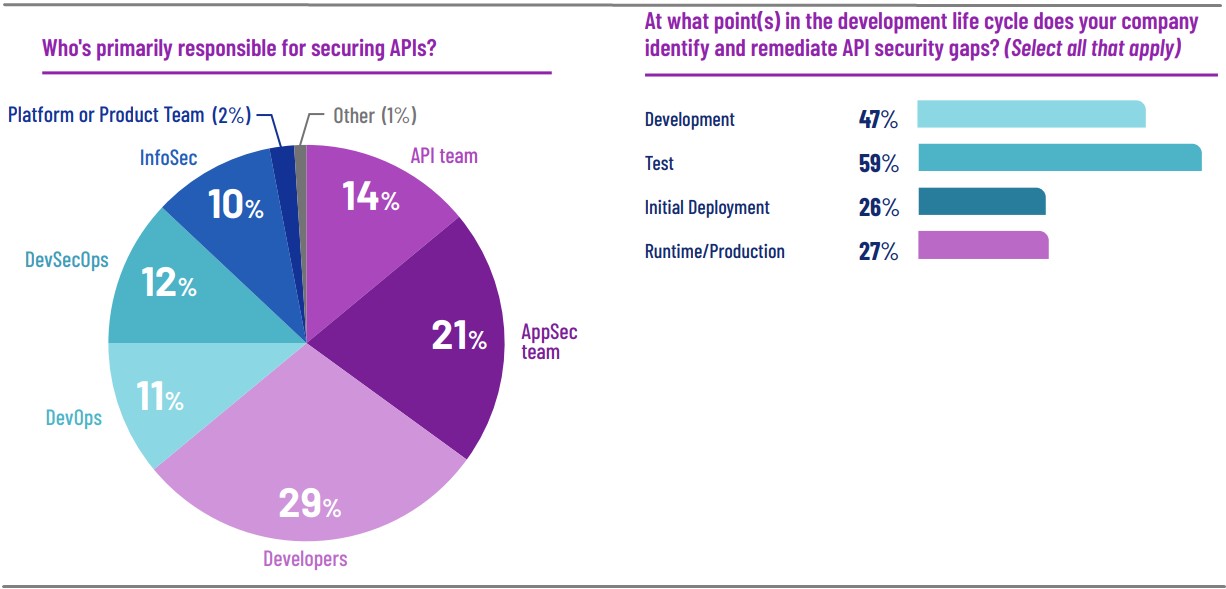
Salt Stability pinpoints the challenge is an over-reliance on pre-manufacturing API protection and a aim on identifying protection troubles all through the advancement stage.

Fact has shown that most API assaults exploit logic flaws that turn into evident only when the apps enter the runtime section. However, just a quarter of organizations continue to employs safety groups at that final stage.

On top of that, 34% of organizations deficiency any API safety tactic, so they depend only on the seller of the API option.

phases
(Salt Protection)

Last but not least, the details exhibits that deploying API gateways or WAFs is not ample to detect and stop XSS, SQL, and JSON injection attacks, as these are performed only soon after the danger actors have completed the essential reconnaissance and discovered usable safety gaps.

Growing complication

Most organizations need API updates and a selected element enrichment right after the preliminary work, which generates an significantly demanding undertaking to manage.

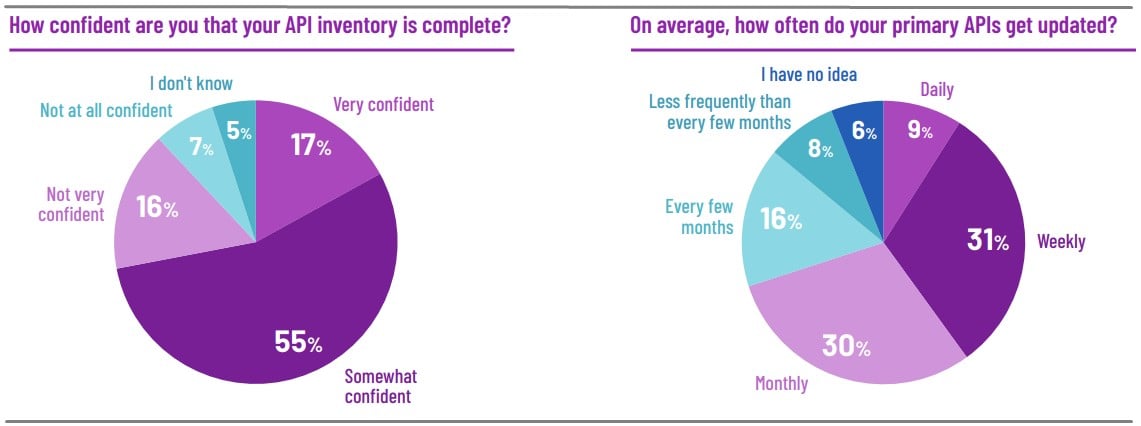
Salt Stability reports that 83% of its study respondents lack self-confidence that their inventory and documentation mirror all current API features.

documentation
(Salt Security)

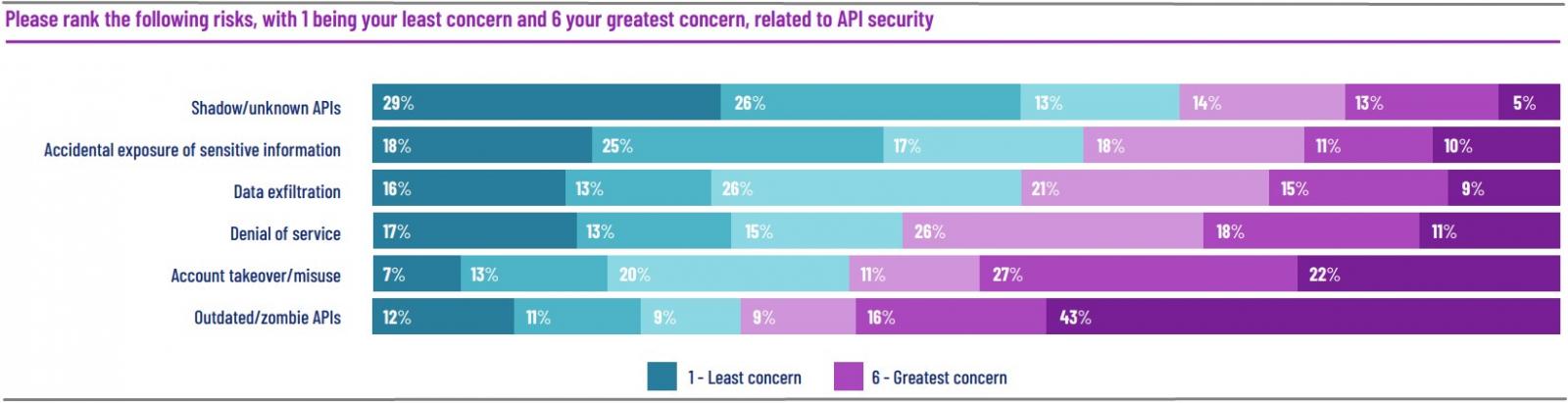
A different 43% reports fears about out-of-date API capabilities that are no for a longer period actively applied in their apps but are however likely available for abuse by menace actors.

zombies
(Salt Protection)

Safety recommendations

Salt Stability sees signals of a shift in how the sector perceives and handles API safety but warns that we’re not there nevertheless.

The key stability recommendations presented in the report are the pursuing:

  • Outline a sturdy API safety system for the overall lifecycle of APIs.
  • Validate existing API models and existing controls and assess the current level of threat.
  • Allow frictionless API security across
Read More

Developer jobs and programming languages: What’s hot and what’s next

Developer jobs and programming languages: What’s hot and what’s next
software-developer-special-report-coding-programming.jpg

Software development is the hottest job on the market – and business is booming.


Image: SolisImages/GETTY

The role of the software developer is as central to an organization’s success now as those right at the top. While they might not be involved in corporate decision making, developers are crucial to steering growth within the enterprise in a market in which software savviness is increasingly a marker of commercial success.

Running technology in a business has become a business in itself. As commerce goes digital and consumers spend more time working, shopping and managing their lives from home, companies are spending billions of dollars to showcase their technology and maintain a lead on competitors. As a result, software creators find themselves in enormous demand.

This ZDNet Special Feature series is both an examination of the role of developers and the work they do, as well as an exploration into the trends that are shaping the software industry, and with it, the direction of travel for businesses in the coming months and years. Our ambition is to cast a light on the value of software developers in the modern digital workplace, as well as investigate the skills, technologies and programming languages that are driving market demand.

Programming languages 

According to CompTIA’s February 2022 Tech Jobs Report, software developers are the biggest driver of tech-hiring activity within US organizations. The average salary of US tech workers in 2018 was $84,300; today, it’s closer to $120,500, with those in decision-making positions able to earn an average salary of $138,200, according to CompTIA.

Dice’s 2022 Tech Salary Report recorded a 6.9% increase in the average technologist salary between 2019 and 2021, reaching $104,566. “That’s the highest salary ever recorded by the Dice Salary Report, and a positive sign for technologists in terms of the current and potential future value of their skills and experience,” the authors noted.

SEE: The easiest programming languages to learn 

The fact that some of the best-paying jobs are in tech is a testament to the value that these professionals bring to businesses, and as such, having one or more programming languages under your belt is going to make you extremely appealing in the eyes of recruiters. Businesses are currently falling over themselves to secure the talent they need to move with the times, making software jobs a secure and lucrative employment field in an otherwise uncertain economic climate.

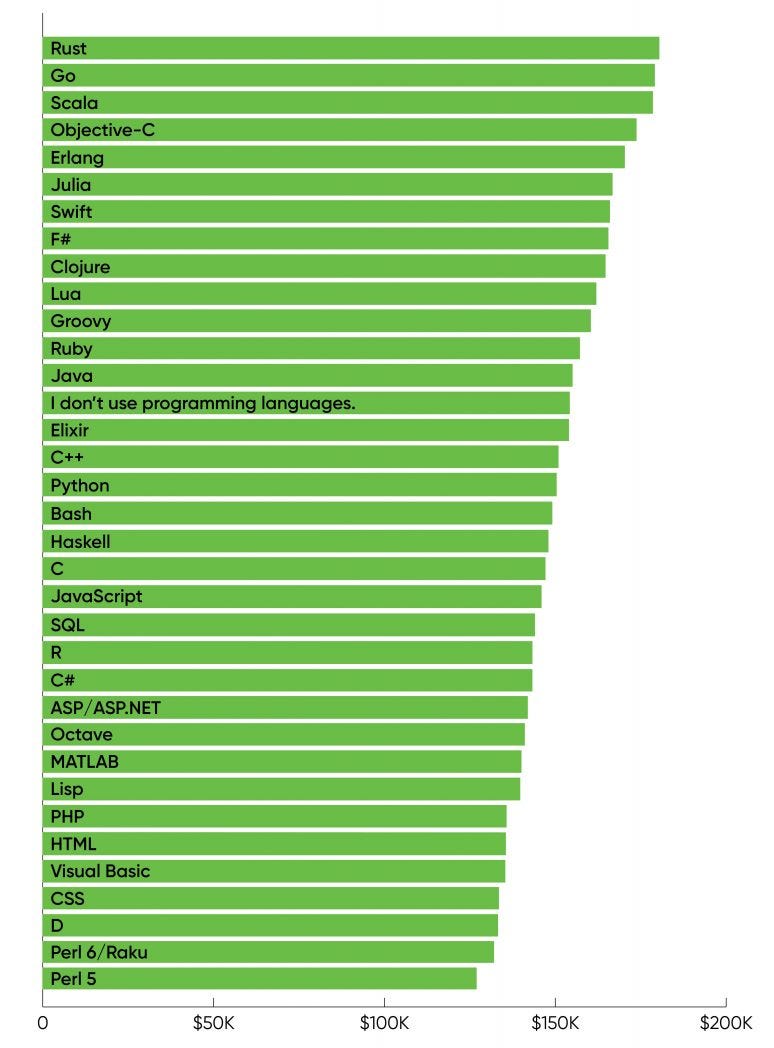
According to O’Reilly’s 2021 Data and AI Salary Survey, developers who work with niche programming languages are likely to take home higher average salaries than their more common counterparts, largely owing to the fact that they are in such short supply.

oreilly-salary-by-programming-language.jpg

Salary by programming language – O’Reilly 2021 Data/AI Salary Survey.


Image: O’Reilly

Its survey found that the most widely used and popular programming languages fell in the middle of the salary range. This included Python ($150,000), SQL ($144,000), Java ($155,000), and JavaScript ($146,000). Web languages, such as HTML, PHP, and CSS, were at the bottom of the range, at

Read More

AWS: Here’s why we are investing in the Rust programming language

AWS: Here’s why we are investing in the Rust programming language

Cloud-computing big Amazon World-wide-web Expert services (AWS) has outlined the factors its engineers are embracing Rust, which includes that it is a additional electrical power-successful programming language.

Just 7 a long time in the past, the Rust programming language attained model 1., building it a person of the youngest languages and a person that also holds large assure for massive code bases written in C and C++. Currently, Amazon, Google, and Microsoft back the language that at first began as a individual project of Graydon Hoare in advance of starting to be a investigate challenge at Mozilla in 2010.

Rust isn’t as well-liked as Java, JavaScript or Python, but it is really grow to be a significant language for constructing techniques like the Linux kernel, Home windows, Chrome, and Android. AWS was an early supporter of Rust and is a founding member of the Rust Foundation, and has an ongoing Rust recruitment generate. 

SEE: Net developer or CTO, which tech work opportunities have the speediest growing salaries?

Rust will help developers prevent a host of memory-relevant flaws popular to C/C++, which eventually charge organizations in stability updates. The language obtained its most significant-profile aid when Microsoft exposed it was experimenting with it for Windows, chiefly to dodge memory bugs. 

But a write-up by AWS’s Rust advocate and software engineer Shane Miller and Carl Lerche, a principal engineer at AWS, highlights that Rust isn’t only about memory protection and lessening stability flaws it is really a much greener language than Python and Java. In that way, it backs up Amazon’s broader drive to make its facts facilities a lot less destructive to the atmosphere, with the enterprise aiming to have its datacenters go absolutely renewable by 2025. 

AWS companies designed on Rust incorporate Firecracker, the know-how behind its Lamba serverless system for containerized applications, Amazon Straightforward Storage Service (S3), Elastic Compute Cloud (EC2), its CloudFront written content delivery network, and Bottlerocket, a Linux-based container OS.     

Datacenters make up 1% of the world’s energy consumption, amounting to about 200 terawatt several hours of power a working day, and the programming languages made use of can also affect electrical power use. 

“It is not a shock that C and Rust are much more economical than other languages. What is stunning is the magnitude of the distinction. Broad adoption of C and Rust could reduce energy consumption of compute by 50% – even with a conservative estimate,” claims Miller, pointing to a study showing the relative electricity efficiency of languages, from C to Google’s Go, Lua, Python, Ruby and previous Fortran.   

“Rust delivers the strength effectiveness of C without the need of the risk of undefined conduct. We can slash energy use in half devoid of shedding the added benefits of memory basic safety,” states Miller. 

She points to the general performance of an app by cybersecurity organization Tenable that was earlier created in JavaScript but is now prepared in Rust. The Rust app trounces JavaScript in CPU effectiveness, chopping latency by 50

Read More

Meet Twist: MIT’s Quantum Programming Language

Meet Twist: MIT’s Quantum Programming Language

While machine learning has been around a long time, deep learning has taken on a life of its own lately. The reason for that has mostly to do with the increasing amounts of computing power that have become widely available—along with the burgeoning quantities of data that can be easily harvested and used to train neural networks.

The amount of computing power at people’s fingertips started growing in leaps and bounds at the turn of the millennium, when graphical processing units (GPUs) began to be
harnessed for nongraphical calculations, a trend that has become increasingly pervasive over the past decade. But the computing demands of deep learning have been rising even faster. This dynamic has spurred engineers to develop electronic hardware accelerators specifically targeted to deep learning, Google’s Tensor Processing Unit (TPU) being a prime example.

Here, I will describe a very different approach to this problem—using optical processors to carry out neural-network calculations with photons instead of electrons. To understand how optics can serve here, you need to know a little bit about how computers currently carry out neural-network calculations. So bear with me as I outline what goes on under the hood.

Almost invariably, artificial neurons are constructed using special software running on digital electronic computers of some sort. That software provides a given neuron with multiple inputs and one output. The state of each neuron depends on the weighted sum of its inputs, to which a nonlinear function, called an activation function, is applied. The result, the output of this neuron, then becomes an input for various other neurons.

Reducing the energy needs of neural networks might require computing with light

For computational efficiency, these neurons are grouped into layers, with neurons connected only to neurons in adjacent layers. The benefit of arranging things that way, as opposed to allowing connections between any two neurons, is that it allows certain mathematical tricks of linear algebra to be used to speed the calculations.

While they are not the whole story, these linear-algebra calculations are the most computationally demanding part of deep learning, particularly as the size of the network grows. This is true for both training (the process of determining what weights to apply to the inputs for each neuron) and for inference (when the neural network is providing the desired results).

What are these mysterious linear-algebra calculations? They aren’t so complicated really. They involve operations on
matrices, which are just rectangular arrays of numbers—spreadsheets if you will, minus the descriptive column headers you might find in a typical Excel file.

This is great news because modern computer hardware has been very well optimized for matrix operations, which were the bread and butter of high-performance computing long before deep learning became popular. The relevant matrix calculations for deep learning boil down to a large number of multiply-and-accumulate operations, whereby pairs of numbers are multiplied together and their products are added up.

Over the years, deep learning has required an ever-growing number of these multiply-and-accumulate operations. Consider

Read More

TIFF unveils crucial additions to programming team, details of 2022 version | Information

TIFF unveils crucial additions to programming team, details of 2022 version | Information

Toronto TIFF generic Connie Tsang

Toronto International Movie Competition (TIFF) has declared five new critical members of the programming crew and unveiled short particulars of this year’s version which is established to operate from September 8–18.

Robyn Citizen will guide the pageant programming group and has been appointed TIFF’s director of pageant programming & Cinematheque. Citizen started at TIFF in 2018 and prior to that was a movie lecturer in the departments of Asian experiments and theatre and film at University of British Columbia from 2012-17 ahead of that, Citizen was board co-chair for Breakthroughs Movie Festival and programmed for Human Rights Movie Pageant.

Andréa Picard has stepped into the whole-time function of senior curator, TIFF & TIFF Cinematheque. She has labored for TIFF given that 1999 as a member of the TIFF Cinematheque programming group and, considering that 2006, as curator of Wavelengths.

Jane Schoettle has returned to direct programming of TIFF’s Exclusive Displays part as senior global programmer. Schoettle has worked for numerous a long time as an worldwide programmer for TIFF responsible for movies from Australia, New Zealand, and Israel as very well as American unbiased cinema. She has programmed thoroughly for festivals in Miami, Aspen, and Palm Springs and for quite a few years developed TIFF Expertise Enhancement programmes Filmmaker Lab and Writers’ Studio.

Jason Ryle has joined and takes on the new job of international programmer, Indigenous cinema which will be programmed across the pageant. He is an Anishinaabe from Lake St. Martin, Manitoba, and has labored as a producer, programmer, curator, tale editor and arts expert. He was executive director of imagineNATIVE from 2010-20, overseeing all operational and inventive pursuits of the once-a-year imagineNATIVE Film + Media Arts Competition, including year-spherical initiatives, global partnerships, and particular tasks.

Kelly Boutsalis, a Mohawk journalist from the Six Nations of the Grand River reserve, joins TIFF as affiliate programmer for Canadian aspect movies, although Ravi Srinivasan rejoins TIFF in a full-time part as senior supervisor, TIFF programming and will lead to the festival’s programming of Canadian feature movies and films from Southeast Asia.

Srinivasan has worked for TIFF as a seasonal programmer because 2013. Prior to his new role he was an global programmer at Sizzling Docs and founder and govt director of the South Western Worldwide Movie Competition.

Women comprise 50% of the total programming group. Seasonal programmers returning for TIFF 2022 are: Jason Anderson, intercontinental programmer, Limited Cuts Diana Cadavid, global programmer Giovanna Fulvi, senior global programmer Nataleah Hunter-Youthful, international programmer Peter Kuplowsky, worldwide programmer, Midnight Madness Dorota Lech, international programmer and Thom Powers, direct programmer, TIFF Docs.

Comprehensive-time TIFF staff customers Steve Gravestock (competition programming) and Geoff Macnaughton (lead programmer, Primetime) spherical out this year’s team of TIFF programmers.

At time of creating, and assuming there is no late summertime surge in Covid-19 cases, TIFF’s 47th edition will see the return of TIFF’s networking and celebratory occasions return including TIFF Opening Evening Party, Field Meeting, filmmaker dinners, Industry networking activities, press and programmers activities and TIFF Tribute Awards Gala.

Read More