Graphene Electronics Market to Reach $5.2 Billion, Globally, By 2031 at 34.2% CAGR: Allied Market Research

Graphene Electronics Market to Reach .2 Billion, Globally, By 2031 at 34.2% CAGR: Allied Market Research

Surge in demand for consumer electronics and digital memory solutions in emerging economies like Brazil, India and others, rise in demand for faster and lower-power devices, increase in demand for advanced electronic solutions with high mechanical strength, superior thermal conductivity, and very high electron mobility across consumer electronics, automotive and other sectors drive the growth of the global graphene electronics market.

PORTLAND, Ore., Feb. 15, 2023 /PRNewswire/ — Allied Market Research published a report, titled, Graphene Electronics Market By Product (Display, Memories, Batteries, Solar Cell, Integrated Circuits and Chips, and Others), Industry Vertical (Consumer Electronics, Automotive, Healthcare, Industrial Robotics, Aerospace and Défense, and Others): Global Opportunity Analysis and Industry Forecast, 2021-2031″. According to the report, the global graphene electronics industry generated $270.8 million in 2021, and is estimated to reach $5.2 billion by 2031 witnessing a CAGR of 34.2% from 2022 to 2031. The report offers a detailed analysis of changing market trends, top segments, key investment pockets, value chains, regional landscapes, and competitive scenarios.

Download Free Sample Report: https://www.alliedmarketresearch.com/request-sample/142

Drivers, Restraints, and Opportunities

Surge in demand for consumer electronics and digital memory solutions in emerging economies like Brazil, India, and others, the rise in demand for faster and lower-power devices, increase in demand for advanced electronic solutions with high mechanical strength, superior thermal conductivity, and very high electron mobility across consumer electronics, automotive and other sectors drive the growth of the global graphene electronics market. However, the high cost and lack of awareness of graphene technology restrict the market growth. On the other hand, a surge in government initiatives regarding research and development will present new growth opportunities for the global graphene electronics market in the coming years.

Report Coverage and Details:

Report Coverage

Details

Forecast Period

2022–2031

Base Year

2021

Market Size in 2021

$270.8 million

Market Size in 2031

$5.2 billion

CAGR

34.2 %

No. of Pages in Report

301

Segments Covered

Product, Industry Vertical, and Region

Drivers

Surge in sales of electronic vehicles paired with superior performance & functionalities

Thriving portable electronics industry

Opportunities

Rise in government investment in research and development

Restraints

High cost and lack of awareness of graphene technology


COVID-19 Scenario
:

  • The outbreak of the COVID-19 pandemic negatively impacted the graphene electronics market. Production and manufacturing facilities around the globe were shut down as a result of lockdowns in several nations.

  • The lack of qualified workers to create next-generation graphene electronics, including memories, batteries, displays, and other components hampered the market growth.

  • However, the global market for graphene electronics has recovered slowly and steadily in the post-pandemic.

The automotive segment to dominate in terms of revenue during the forecast period

By industry vertical, the automotive segment contributed to the largest share of more than one-third of the global graphene electronics market in 2021 and is expected to maintain progressive growth during the forecast period. The segment is driven by the increasing adoption of graphene electronics in automotive vehicles to ensure exceptional storage capacity, excellent charging


Read More

Digi-Crucial Electronics Ranked #16 on Forbes’ 2023 List of America’s Most effective Midsize Employers

Digi-Crucial Electronics Ranked #16 on Forbes’ 2023 List of America’s Most effective Midsize Employers

THIEF RIVER FALLS, Minn., Feb. 15, 2023 /PRNewswire/ — Digi-Essential Electronics, which gives the world’s biggest variety of digital components and automation products in stock for fast shipment, introduced that it has been rated #16 on Forbes‘ prestigious record of America’s Very best Midsize Companies for 2023. The company also rated #2 in the classification of Semiconductors, Electronics, Electrical Engineering, Technological innovation Components & Machines.

Digi-Key was ranked #16 out of 500 companies on Forbes’ 2023 List of America’s Best Midsize Employers.

Digi-Vital was rated #16 out of 500 firms on Forbes’ 2023 Checklist of America’s Very best Midsize Companies.

America’s Very best Midsize Companies 2023 is based mostly on an unbiased survey of roughly 45,000 American personnel across corporations with a lot more than 1,000 personnel in the United States. Across 25 marketplace sectors, 500 diverse employers were being regarded. The conditions looked at how prepared respondents ended up to recommend their workplace to good friends and relatives as effectively as employer perception in their respective sector. This is the next yr that Digi-Critical has designed this listing.

“Digi-Essential is proud to be acknowledged by Forbes as a single of the greatest businesses in The us,” mentioned Shane Zutz, vice president of human means at Digi-Key. “We are laser-focused on being a business that puts our group associates first and we are very pleased that our employees can come to feel that. None of the work we do is possible without the need of them, and the tremendous advancement we’ve skilled more than the past few of a long time has been many thanks to their unwavering work ethic and enthusiasm for advancement.”

Digi-Key has expert extra than 80% development in 24 months which is pretty much unheard of in the distribution space. They also recently opened the doors to their 2.2 million square foot Product or service Distribution Center growth (PDCe), which will let the corporation to scale ability to maintain up with skyrocketing demand from customers.

Digi-Important places chances to expand at the forefront, connecting expertise with career enhancement resources and furnishing an marketplace-leading benefits package deal. Digi-Key’s in depth health insurance policy strategy handles, on common, additional than 97% of employees’ bills, with no premiums for person protection and very lower costs for family members. The on-internet site Crucial Wellness & Wellness Centre clinic allows for staff to acquire quick, productive and free of charge wellbeing treatment, devoid of a co-fork out or the will need to clock out of do the job. Digi-Important also provides generous 401(k) matching money as effectively as competitive paid time off, and lots of other benefits and rewards.

The complete list can be considered on the Forbes web site.

For extra data about Digi-Essential and career chances, take a look at the Digi-Essential careers website.

About Digi-Important Electronics
Digi-Essential Electronics, headquartered in Thief River Falls, Minn., United states, is recognized as both of those the chief and constant innovator in the superior assistance distribution of digital components and automation solutions around the world. As the initial pioneer

Read More

BIND connector keeps the “stretch” in stretchable electronic devices

BIND connector keeps the “stretch” in stretchable electronic devices

Whilst the field of stretchable electronics does hold a ton of guarantee, becoming a member of the factors of these kinds of equipment together can be tough. A new connector is intended to aid, as it stretches concerning the elements, additionally it links them to a single an additional in a make any difference of seconds.

As points at this time stand, the numerous pieces of stretchable electronic devices (these types of as tender-bodied robots or wearable sensors) are often glued instantly together. However, electrical indicators are unable to travel by way of the glue. Furthermore, the glue’s bond will before long crack when those people pieces are pulled in opposite instructions.

Searching for a better-operating option, an worldwide crew of experts led by Prof. Chen Xiaodong from Singapore’s Nanyang Technological College developed a ribbon-like connector known as the BIND (BIphasic, Nano-dispersed Interface).

It can be composed mostly of a tender thermoplastic that is previously extensively made use of in stretchable electronics, recognized as styrene-ethylene-butylene-styrene. Embedded within the thermoplastic matrix are electrically conductive nanoparticles of gold or silver.

When customers are assembling stretchable digital equipment, they merely press just about every conclusion of a single BIND connector to the circuitboard, and many others in each individual of two parts – the finishes securely adhere them selves to these things in just 10 seconds. The connector can then be stretched up to seven situations its comfortable length with no breaking. It also continues to carry a sturdy electrical signal amongst the parts though being stretched by up to 2.8 occasions its standard condition.

Also, a standard Peel Adhesion Take a look at confirmed that the two finishes of the connector (which are bonded to the linked parts) have 60 times the adhesion toughness of regular connective glues.

The know-how has by now been efficiently analyzed on checking devices which were hooked up to rats and human skin, in the latter scenario measuring the electrical exercise of arm muscle groups even when underwater.

“These amazing benefits confirm that our interface can be applied to build hugely functional and reputable wearable units or tender robots,” stated Nanyang’s Dr. Jiang Ying. “For example, it can be employed in large-quality wearable health and fitness trackers in which end users can extend, gesture, and move in whichever way they are most comfy with, without impacting the device’s capacity to seize and watch their physiological indicators.”

A paper on the analysis – which also involved researchers from Stanford College Shenzhen Institute of Superior Technologies Company for Science, Know-how and Exploration (A*STAR) and the Countrywide University of Singapore – was not long ago revealed in the journal Character.

Supply: Nanyang Technological College

appId : '38456013908',

xfbml : correct, variation : 'v3.3' )

(functionality(d, s, id) var js, fjs = d.getElementsByTagName(s)[0] if (d.getElementById(id)) return js = d.createElement(s) js.id = id js.src = "https://link.facebook.net/en_US/sdk.js" fjs.parentNode.insertBefore(js, fjs) (doc, 'script', 'facebook-jssdk')) …

Read More

SparkFun Electronics, InPlay, and Bosch Sensortec associate to launch two new NanoBeacon boards to speed up improvement of wi-fi IoT remedies

SparkFun Electronics, InPlay, and Bosch Sensortec associate to launch two new NanoBeacon boards to speed up improvement of wi-fi IoT remedies

Centered on the NanoBeacon IN100 SoC, the boards are Qwiic enabled, ultra-small electric power, require no coding, support Bosch Sensortec’s BME280 and BMA400 sensors, and join to InPlay’s new NanoBeacon BLE Scanner App 

BOULDER, Colo., Feb. 17, 2023 /PRNewswire/ — In collaboration with InPlay and Bosch Sensortec, SparkFun® is happy to launch two new IoT improvement boards: the SparkFun NanoBeacon Board – IN100  and SparkFun NanoBeacon Lite Board – IN100. The two variations make it possible for for prototyping with the “Lite” model and then using the creation version in massive installations at the time style is full. These boards are good choices for wi-fi sensor checking, asset monitoring, retail beacons, or even creating your possess beacon tag for genuine-time site monitoring.

(PRNewsfoto/SparkFun Electronics)

(PRNewsfoto/SparkFun Electronics)

The boards element the IN100 NanoBeacon from InPlay, which is Bluetooth® Low Electricity compliant and transmits at a 2.4GHz frequency. Primary highlights include things like:

  • Minimal electric power: power usage to beneath a microamp – letting it to be still left in the subject sending data packets for numerous several years on a coin cell battery.

  • Programming-absolutely free style and design: eradicates the will need for embedded software programming a Personal computer configuration device is offered to configure the IN100 unit in accordance to application demands.

  • Qwiic® enabled: on-board Qwiic connector permits builders to make the most of 400+ products and solutions in the Qwiic rapid prototyping ecosystem.

  • Configured for Bosch Sensortec sensors: prepared to link the BME280 3-in-1 humidity sensor, measuring humidity, air force and ambient temperature, and the BMA400 ultra-lower electric power accelerometer sensor breakouts.

  • Remarkable assortment: up to various hundred meters.

  • NanoBeacon BLE Scanner Application: direct relationship to newly released mobile app makes it possible for consumers to simply accessibility and benefit from the information supplied by encompassing BLE peripherals and beacons.

“We consider this partnership with SparkFun, who has integrated our NanoBeacon SoC with their Qwiic connector interface and Bosch Sensortec’s high-effectiveness sensors, will deliver remarkable benefit to the IoT industry,” claimed Jason Wu, co-founder and CEO of InPlay, “We glance ahead to seeing the creativeness and innovation from the developer community with this new technology.”

“With its NanoBeacon SoC know-how, InPlay provides an innovative, programming-free of charge alternative to the IoT that we are psyched to provide to sector,” stated Kirk Benell, CTO at SparkFun. “Merging this solution with SparkFun’s plug-and-enjoy Qwiic ecosystem delivers a frictionless IoT progress resolution. Pairing this swift IoT system with Bosch Sensortec’s extraordinary sensors enables the enhancement and deployment of reduced-electric power, large-benefit IoT sensor nodes in minutes.”

“This partnership will help to leverage synergies through the competencies of the companions: SparkFun’s easy-to-use Qwiic ecosystem mixed with InPlay’s state-of-the-artwork wi-fi chip go hand-in-hand with Bosch Sensortec’s reduced-electricity, higher functionality and innovative sensing options, earning them far more accessible to builders and reducing time-to-marketplace with lite and manufacturing versions of the new IoT progress option,” explained Dr. Stefan Finkbeiner, CEO of Bosch Sensortec.

About SparkFun Electronics (www.sparkfun.com)

Read More

A new elastic polymer dielectric to build wafer-scale stretchable electronics

A new elastic polymer dielectric to build wafer-scale stretchable electronics
A new elastic polymer dielectric to create wafer-scale stretchable electronics
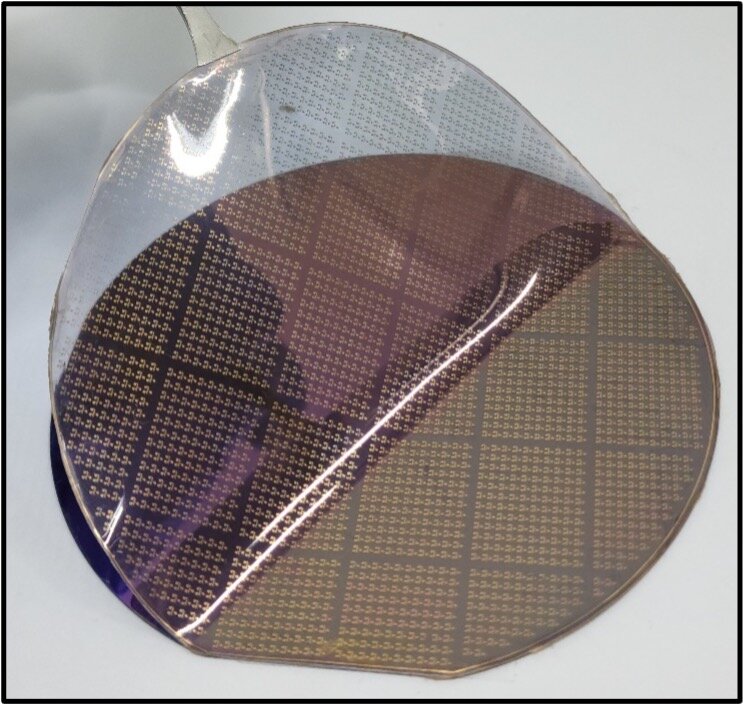
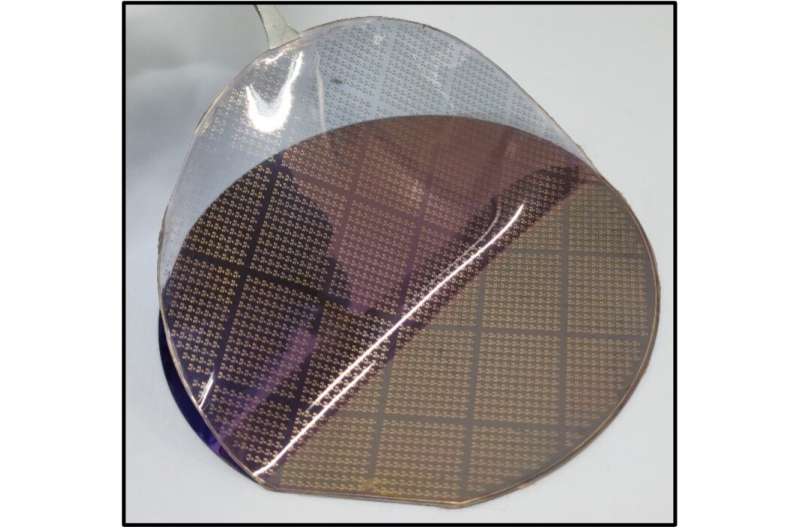
Photograph of wafer-scale fabrication of intrinsically stretchable transistor arrays using a vacuum-deposited polymer dielectric. Credit rating: Prof. Donghee Son and Dr. Ja Hoon Koo.

Around the previous several yrs, content scientists and electronics engineers have been hoping to fabricate new adaptable inorganic products to create stretchable and highly performing electronic products. These products can be based mostly on distinct styles, this sort of as rigid-island energetic cells with serpentine-condition/fractal interconnections, neutral mechanical planes or bunked structures.

In spite of the major progress in the fabrication of stretchable materials, some issues have proved hard to overcome. For instance, materials with wavy or serpentine interconnect styles typically have a restricted area density and fabricating proposed stretchable components is usually equally tough and highly-priced. In addition, the stiffness of many existing stretchable materials does not match that of human skin tissue, producing them uncomfortable on the skin and as a result not excellent for making wearable technologies.

Scientists at Sungkyunkwan University (SKKU), Institute for Primary Science (IBS), Seoul Countrywide University (SNU), and Korea State-of-the-art Institute of Science and Technology (KAIST) have not long ago fabricated a vacuum-deposited elastic polymer for building stretchable electronics. This materials, released in Nature Electronics, could be applied to create stretchy discipline-outcome transistors (FETs), which are primary elements of most digital units on the market place these days.

“Just lately, a variety of techniques for adopting smooth supplies have been proposed for creating intrinsically stretchable electronics which does not require any particular structural layouts owing to their intrinsic deformability,” Donghee Son, one of the scientists who carried out the review, told Tech Xplore. “Nonetheless, this sort of gadgets utilized option-processed dielectric products and therefore face significant issues in accomplishing superior electrical performances.”

Remedy-processed organic and natural gate dielectric supplies, materials that can transmit electric power without the need of conducting it (i.e., insulating it), are not particularly suited for the generation of versatile electronics. Most notably, they have thicknesses in the micrometer-scale, very poor insulating performances, chemical instability and a small uniformity. In addition, they are normally incompatible with conventional microfabrication processes, building them tricky to develop on a large scale.

As a outcome of these restrictions, electronic factors dependent on these option-processed components are plagued by weak gate controllability and significant procedure voltages, as perfectly as a limited scalability. Son and his colleagues, together with other research groups throughout the world, have so been striving to make ultrathin, stretchable, scalable, and remarkably accomplishing dielectrics with option fabrication strategies.

“In our examine, we existing a new method to the design and style of dielectric products to take care of the aforementioned difficulties in intrinsically stretchable digital devices,” Son discussed. “Our significant-scale vacuum-deposited stretchable dielectric allows the scalable fabrication of intrinsically stretchable devices with electrical performances equivalent to all those fabricated applying the non-stretchable inorganic and stretchable organic dielectric elements (e.g., Al2O3 deposited by means of atomic layer deposition & spin-coated viscoelastic layer).”

A new elastic polymer dielectric to create wafer-scale stretchable electronics
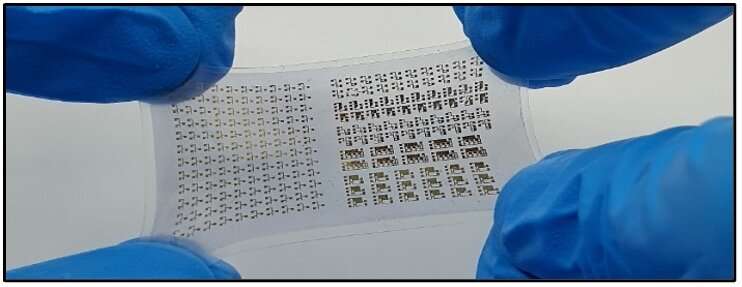
Impression of intrinsically stretchable transistors and logic gates employing a vacuum-deposited polymer dielectric.
Read More

Two-dimensional oxides open up doorway for superior-pace electronics

Two-dimensional oxides open up doorway for superior-pace electronics
Two-dimensional oxides open door for high-speed electronics
Furkan Turker, graduate college student in the Division of Supplies Sciences, will work on a silicon carbide chip in the laboratory. Credit history: Penn Condition

Developments in computing electricity around the a long time have appear many thanks in part to our skill to make smaller sized and scaled-down transistors, a building block of digital gadgets, but we are nearing the limit of the silicon products typically made use of. A new system for developing 2D oxide elements may pave the way for long run higher-speed electronics, in accordance to an intercontinental team of scientists.

“1 way we can make our transistors, our digital devices, operate more quickly is to shrink the length electrons have to vacation involving position A and B,” stated Joshua Robinson, professor of materials science and engineering at Penn Condition. “You can only go so considerably with 3D products like silicon—once you shrink it down to a nanometer, its attributes transform. So you can find been a large press looking at new resources, 1 of which are 2D elements.”

The crew, led by Furkan Turker, graduate university student in the Department of Components Sciences, applied a method referred to as confinement hetroepitaxy, or CHet, to produce 2D oxides, resources with special qualities that can serve as an atomically slender insulating layer concerning levels of electrically conducting products.

“Now we can develop essentially the world’s thinnest oxides—just a several atoms thick,” Turker stated. “That will allow you to bring conducting layers nearer with each other than at any time without the need of allowing them contact. This allows the formation of an ultrathin barrier amongst conducting layers, which is important for the fabrication of future-technology electronic units, this sort of as diodes or transistors.”

In laboratory tests, the oxides showed superior qualities for use in 2D/3D stacked materials called heterostructures that can empower electrons to travel vertically as a result of the structure in its place of horizontally like regular units.

This shortens the length the electrons ought to vacation to produce a circulation of electrical power, significant for developing potential significant-velocity devices that work at gigahertz and terahertz frequencies, the scientists reported. They reported their findings in the journal Superior Practical Resources.

“That’s the true enthusiasm behind this—can we build one thing that is an insulator that is primarily only a several atoms thick and nevertheless be in a position to control the digital homes of the overall stack,” Robinson explained. “And since it truly is a great deal shorter that means our electrons can go from A to B more rapidly and they don’t have to increase their velocity at all.”

The research draws on previous operate at Penn Condition making use of confinement heteroepitaxy to create atomic skinny metals, which is now getting explored as element of the Centre for Nanoscale Science at Penn State, a National Science Foundation Components Exploration, Science and Engineering Middle (MRSEC).

The approach requires heating silicon carbide to a substantial temperature, creating a thin layer of silicon to

Read More